This page is broader than the gatekeeping case. It treats the archive as a field observatory: who appears in conference programmes, which institutions hold the visible core, where network communities emerge, and which conclusions require human review.
1. Institutional ecology
Russian Indology is not held only by RAS institutes and classical universities. The corpus also shows museum, library, regional, independent, and inter-institutional trajectories. This matters because horizontal collaboration often appears outside a single department or laboratory.
Zograf and Roerich Readings register a public face of the field: who is invited, who returns, and which themes receive programme space.
Informal communities are visible through repeated themes, shared sessions, cross-city ties, and external activity, but should not be reduced to the American "invisible college" model.
2. Generations and changing presence
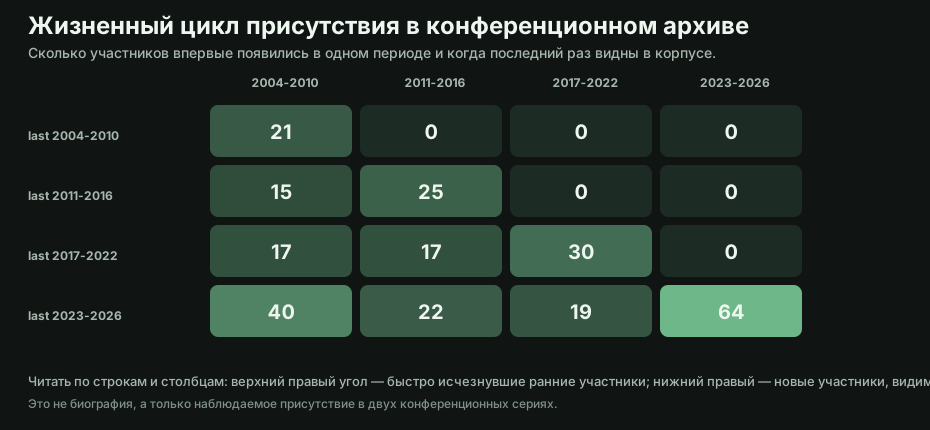
Absence from a programme is not self-explanatory. It may reflect death, illness, age-related withdrawal from active conference life, the post-2022 political context around Russia, emigration, personal choice, or programme filtering. The page therefore separates post-2022 absence from the 2026 programme case.
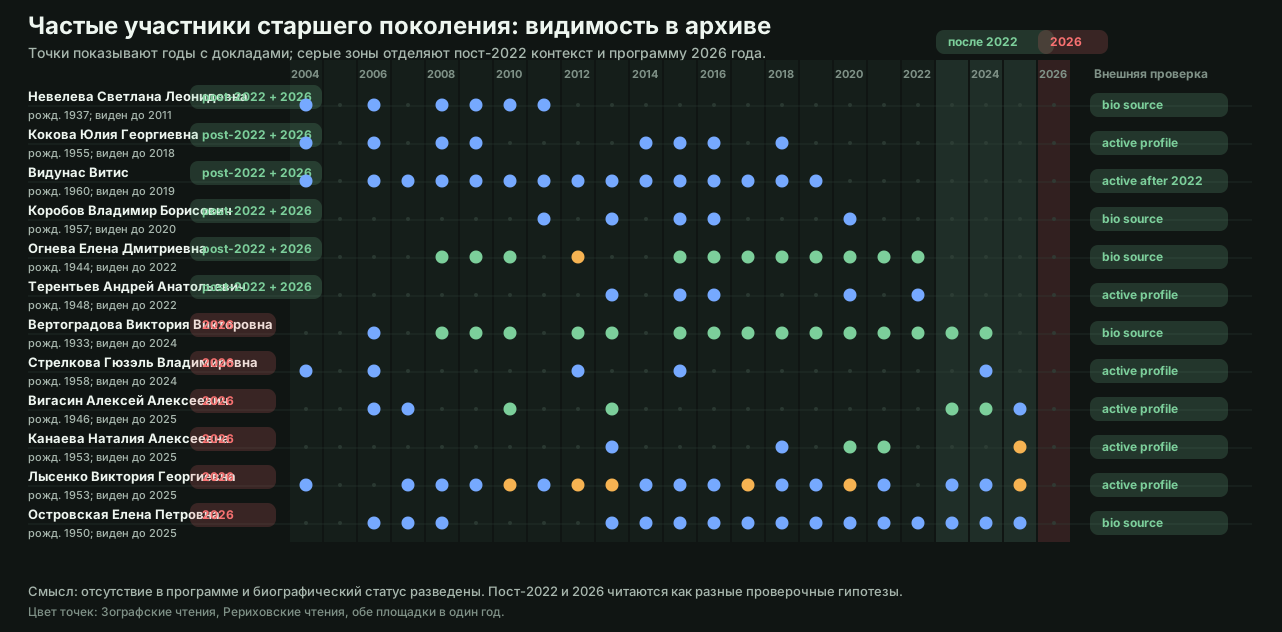
Frequent senior-generation participants not visible after 2022
| Participant | Born | Talks before 2023 | Last year | External check |
|---|---|---|---|---|
| Видунас Витис | 1960 | 15 | 2019 | external activity after 2022 Vilnius University scholar Vytis Vidunas receives the 2023 India-Lithuania Friendship Award |
| Огнева Елена Дмитриевна | 1944 | 13 | 2022 | biographical profile without a death marker Огнева Елена Дмитриевна |
| Кокова Юлия Георгиевна | 1955 | 8 | 2018 | active/current profile Кокова Юлия Георгиевна | Orientalia Rossica |
| Невелева Светлана Леонидовна | 1937 | 6 | 2011 | biographical profile without a death marker Невелева Светлана Леонидовна | ИВР РАН personalia PDF |
| Коробов Владимир Борисович | 1957 | 5 | 2020 | biographical profile without a death marker Коробов Владимир Борисович (востоковед) |
| Терентьев Андрей Анатольевич | 1948 | 5 | 2022 | active/current profile Терентьев Андрей Анатольевич | Dharma.ru |
Frequent senior-generation participants absent from the 2026 programme
This table does not repeat people already listed in the post-2022 group. For the remaining senior-generation rows, health, age, and biographical withdrawal are the first explanations to check.
| Participant | Born | Talks before 2026 | Last year | External check |
|---|---|---|---|---|
| Лысенко Виктория Георгиевна | 1953 | 25 | 2025 | active/current profile Лысенко Виктория Георгиевна | Институт философии РАН |
| Вертоградова Виктория Викторовна | 1933 | 17 | 2024 | biographical profile without a death marker Вертоградова Виктория Викторовна | Философский факультет МГУ |
| Островская Елена Петровна | 1950 | 16 | 2025 | biographical profile without a death marker Островская Елена Петровна |
| Вигасин Алексей Алексеевич | 1946 | 7 | 2025 | active/current profile ЭС: А.А.Вигасин | Летопись Московского университета |
| Канаева Наталия Алексеевна | 1953 | 6 | 2025 | active/current profile Канаева Наталия Алексеевна | НИУ ВШЭ |
| Стрелкова Гюзэль Владимировна | 1958 | 5 | 2024 | active/current profile Стрелкова Гюзэль Владимировна | ИСТИНА |
The machine-readable review queue is senior_absence_audit.csv; curated external biographical checks are in senior_biographical_verification.csv.
3. Network mediators
The Russian page avoids using "broker" as the main public term. The intended meaning is a network mediator: a participant through whom otherwise weakly connected groups become connected.
4. Gatekeeping as a focused case
The more charged question of programme filters and generational conflict is separated into the gatekeeping page. This keeps the sociology page as a broad field overview.
5. What the editor should check
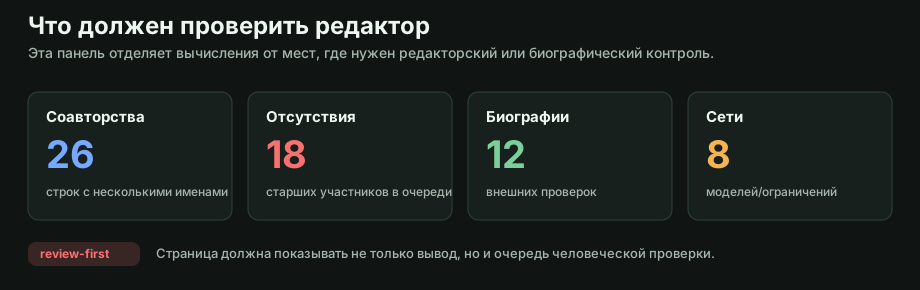
Editorial choices about audience, naming, and claim strength are recorded in the meta-document.